MÁSTER PC21 BLOG
  • Inicio
  • Máster PC21
  • Blog Máster PC21
    • Cursos académicos >
      • Curso 2017/2018 >
        • (IN) Transitando CIU
        • TICS >
          • Antonio Palacios
          • Patrimonio Cultural Ferroviario >
            • Patrimonio Cultural 3.0
          • Patrimonio Inmaterial PC21
          • Ciudad Universitaria Desconocida
          • Madrid Me Mola PCXXI
      • Curso 2018/2019
      • Curso 2019/2020
      • Curso 2020/2021
      • Curso 2021/2022 >
        • CIU 21-22 Contenidos
        • CIU 21-22 Blog
      • Curso 2022/2023 >
        • Blog curso 2022/2023
      • Curso 2023/2024 >
        • Blog curso 2023/2024
      • Curso 2024/2025 >
        • Blog curso 2024/2025
  • + Histórico
    • Blog Máster PC21 2017-2021
  • ODS 2030
  • Contacto
  • Inicio
  • Máster PC21
  • Blog Máster PC21
    • Cursos académicos >
      • Curso 2017/2018 >
        • (IN) Transitando CIU
        • TICS >
          • Antonio Palacios
          • Patrimonio Cultural Ferroviario >
            • Patrimonio Cultural 3.0
          • Patrimonio Inmaterial PC21
          • Ciudad Universitaria Desconocida
          • Madrid Me Mola PCXXI
      • Curso 2018/2019
      • Curso 2019/2020
      • Curso 2020/2021
      • Curso 2021/2022 >
        • CIU 21-22 Contenidos
        • CIU 21-22 Blog
      • Curso 2022/2023 >
        • Blog curso 2022/2023
      • Curso 2023/2024 >
        • Blog curso 2023/2024
      • Curso 2024/2025 >
        • Blog curso 2024/2025
  • + Histórico
    • Blog Máster PC21 2017-2021
  • ODS 2030
  • Contacto
Search by typing & pressing enter

YOUR CART

Blog 2023/2024

30/12/2023 0 Comentarios

¡Despedimos el año con uno de los espacios naturales más importantes de España y Europa! Nos referimos al Parque Nacional y Natural Doñana, que acompaña nuestra a la Línea Sevilla - Huelva a lo largo de gran parte de su recorrido.
Foto
El Parque Nacional y Natural Doñana cubre una extensión total de 122.487 hectáreas, entre 54.251 de Parque Nacional y 68.236 de Parque Natural, ubicándose en Andalucía, entre las provincias de Sevilla, Huelva y Cádiz, siendo cercana a la línea Sevilla-Huelva y entrando en contacto directamente con ella en los municipios de Aznalcázar y Pilas -donde se encuentra la estación que combina el nombre de ambas-, pero siempre decorando el paisaje de nuestra línea, dotándolo de un hermoso entorno natural.
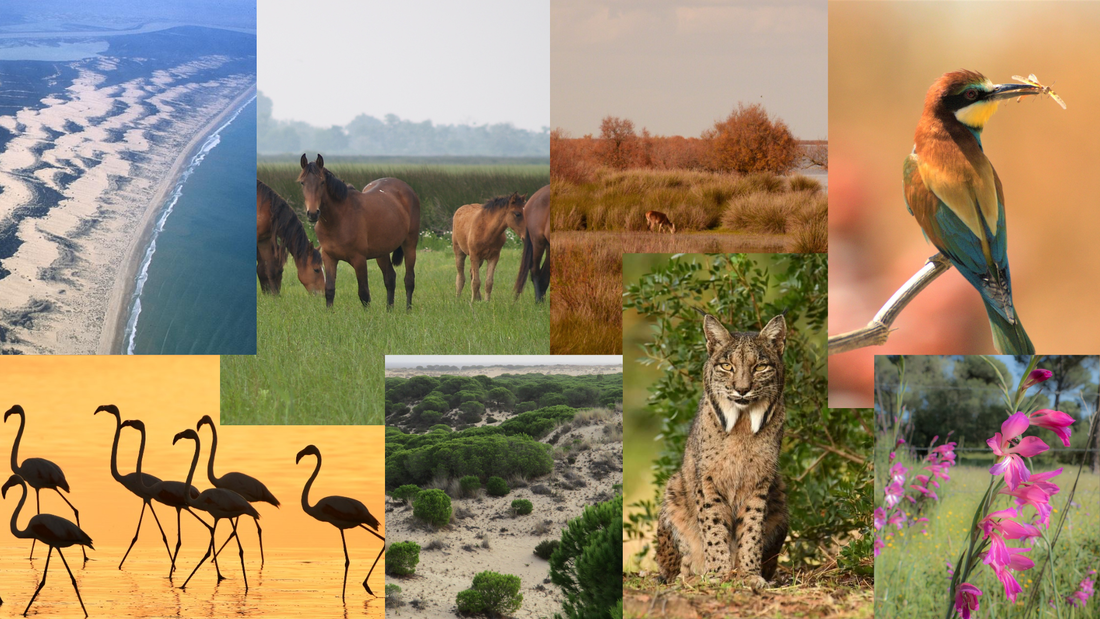
Este Parque destaca por una ubicación privilegiada, donde el Mar Mediterráneo se encuentra con el Océano Atlántico, además de estar en Europa en un punto cercano a África, factores que lo hacen un lugar especial para la migración, anidación y cría de más de 300 especies de aves acuáticas y terrestres, provenientes de ambos continentes, las cuales aprovechan un espacio natural único donde se combinan dunas, cotos y las marismas que aparecen en la desembocadura del Río Guadalquivir.
Pero no sólo aves habitan en el Parque, también podemos encontrarnos con especies tan escasas con el Lince Ibérico, conocido como la especie felina “más amenazada del mundo”, realizándose actualmente esfuerzos en el Parque para aumentar su población. También observamos aquí dos especies de caballos autóctonas de España, como el caballo marismeño y el caballo de las retuertas -la raza más antigua de Europa-, ambos en peligro de extinción. También conviven jabalíes, gatos monteses, erizos europeos, vacas marismeñas y nutrias entre muchos otros animales de una amplia variedad que dan cuenta de lo relevante de este lugar.
Conforme queda en evidencia, la marisma ocupa un lugar especial en el ecosistema del Parque, con una extensión de unas 27.000 hectáreas, dividida entre la marisma dulce y la salada, formando un área de incalculable valor natural para la vida de las diversas especies de la zona. Lamentablemente, se encuentra en peligro por la escases de agua, cada año más acentuada.
Así, el Parque ha enfrentado numerosas amenazas de origen humano, siendo la peor la ocurrida en 1998, el “Desastre de Aznalcóllar”, cuando por la rotura de una balsa minera en ese municipio, fueron vertidos entre 5 y 6 millones de metros cúbicos de aguas y lodos tóxicos con una alta acidez, sobre las riberas de los ríos Agrio y Guadiamar. El barro recorrió 62 kilómetros y llegó hasta las puertas de Doñana, no logrando ingresar de lleno afortunadamente. En total, se vieron afectadas cerca de 4.600 hectáreas, con un resultado desolador: se batió el récord mundial de concentración de metales pesados en aves acuáticas, se retiraron 7 millones de metros cúbicos de lodos y 30 toneladas de animales muertos. El desastre terminó también con unos 5.000 puestos de empleo y causó unas pérdidas alrededor de 1.800 millones de las antiguas pesetas. Boliden, la empresa sueca responsable de la mina, sólo se hizo cargo de la limpieza en la zona cercana a la rotura, correspondiendo a la Junta de Andalucía y el Gobierno el resto, que fue un 90% de la superficie dañada, encontrándose aún altas concentraciones de acidez en las áreas aledañas al Parque. A la fecha, la empresa no ha pagado por los daños, en un proceso judicial que sigue abierto.
A ello se ha sumado la sequía, caza furtiva, desvío de cauces acuíferos, incendios forestales, entrada ilegal con automóviles en el hábitat de las especies y un largo número de actividades que han deteriorado la zona.  Por ello, a pesar de haber sido inscrito en 1994 en la Lista de Patrimonio de la Humanidad de la UNESCO, en 2023 fue excluido de la lista verde de la Unión Internacional para la Conservación de la Naturaleza (UICN) por su mala gestión por parte de la Junta de Andalucía, responsable de ejecutar medidas para revertir el deterioro de su biodiversidad. Es el primer parque excluido de la lista, lo cual nos recuerda la importancia de saber preservar adecuadamente esta clase invaluables zonas de biodiversidad.


"We bid farewell to the year with one of the most important natural spaces in Spain and Europe! We are referring to the Doñana National and Natural Park, which accompanies our Seville - Huelva route along a significant part of its journey.

The Doñana National and Natural Park covers a total area of ​​122,487 hectares, with 54,251 as National Park and 68,236 as Natural Park, located in Andalusia, between the provinces of Seville, Huelva, and Cádiz. It is close to the Seville-Huelva line and directly interacts with it in the municipalities of Aznalcázar and Pilas -where the station named after both is located-. It is always adorning the landscape of our route, providing it with a beautiful natural environment.
This Park stands out for its privileged location, where the Mediterranean Sea meets the Atlantic Ocean. It is also positioned in Europe near Africa, making it a special place for the migration, nesting, and breeding of more than 300 species of aquatic and terrestrial birds from both continents. They take advantage of a unique natural space where dunes, grounds, and marshes appear at the mouth of the Guadalquivir River.
But not only birds inhabit the Park; we can also find rare species such as the Iberian Lynx, known as the "most endangered feline specie in the world." Efforts are currently being made in the Park to increase its population. Here, we also observe two native Spanish horse species, the marismeño horse and the retuertas horse -the oldest breed in Europe- both endangered. Wild boars, wildcats, European hedgehogs, marismeña cows, otters, and many other animals of a wide variety coexist, emphasizing the relevance of this place.
As evident, the marsh occupies a special place in the Park's ecosystem, with an area of ​​about 27,000 hectares, divided between freshwater and saltwater marshes, forming an area of ​​incalculable natural value for the life of the various species in the region. Unfortunately, it is endangered due to water scarcity, increasingly pronounced every year.
Thus, the Park has faced numerous threats of human origin, with the worst occurring in 1998 - the "Aznalcóllar Disaster" - when a mining dam in that municipality ruptured, releasing between 5 and 6 million cubic meters of toxic water and sludge with high acidity into the Agrio and Guadiamar rivers. The mud traveled 62 kilometers and reached the gates of Doñana, fortunately not fully entering. In total, about 4,600 hectares were affected, with a devastating outcome: the world record for heavy metal concentration in waterfowl was broken, 7 million cubic meters of sludge and 30 tons of dead animals were removed. The disaster also resulted in about 5,000 job losses and around 1,800 million old pesetas in losses. Boliden, the Swedish company responsible for the mine, only took care of cleaning up the area near the rupture, leaving the rest -90% of the damaged area- to the Andalusian government and the Spanish government. High acidity concentrations are still present in areas surrounding the Park. To date, the company has not paid for the damages, and the legal process remains ongoing.
This has been compounded by drought, poaching, diversion of aquifer courses, forest fires, illegal entry with vehicles into species habitats, and a long list of activities that have deteriorated the area. Therefore, despite being listed in 1994 on the UNESCO World Heritage List, in 2023, it was excluded from the green list of the International Union for Conservation of Nature (IUCN) due to mismanagement by the Andalusian government, responsible for implementing measures to reverse its biodiversity deterioration. It is the first park to be excluded from the list, reminding us of the importance of properly preserving these invaluable biodiversity areas.


0 Comentarios

25/12/2023 0 Comentarios

EDIFICIO CARRIÓN #ACCIÓNCOAM #COAM

El Edificio Carrión, una joya arquitectónica situada en pleno corazón de la Gran Vía de Madrid, es un testimonio viviente del esplendor del estilo Art Decó. Construido entre 1931 y 1933 por los arquitectos Antonio Feduchi y Vicente Eced y Eced, este edificio se erige como un monumento a la elegancia y la innovación en el diseño arquitectónico.
Ubicado en C/ de Jacometrezo, 2, el Edificio Carrión se destaca por su fachada ornamentada y detalles geométricos, características distintivas del Art Decó. Cada rincón de esta obra maestra cuenta una historia de la época en la que fue concebida, un periodo que abrazó la modernidad y la estética vanguardista.
Para aquellos que deseen sumergirse aún más en la historia y la estructura del Edificio Carrión, la @fundacioncoam, ubicada en C/ de Hortaleza 63, ofrece una invaluable colección de archivos que incluyen fotografías, planimetría y otros documentos relacionados. Este centro se convierte en un faro para los amantes de la arquitectura, proporcionando una ventana única a la evolución y la creatividad detrás de este emblemático edificio.
Además, el Edificio Carrión no solo es un monumento arquitectónico, sino también un lugar de entretenimiento icónico. ¿Qué mejor manera de experimentar la majestuosidad de este lugar que disfrutando de una película en el legendario Cine Capitol? Con su encanto nostálgico, este cine añade una capa adicional de historia y cultura a la experiencia.
En resumen, el Edificio Carrión no solo es un punto de referencia arquitectónico en Madrid, sino también un portal al pasado que invita a explorar el legado del Art Decó en la capital española. ¿Te unes a la acción COAM y exploras este rincón único donde la arquitectura, la cultura y el entretenimiento convergen? 

#acciónCOAM #arquitectura #planesnuevosmadrid #madrid #cultura #exposiciones #arte #barriochueca #COAM #fundacionCOAM


The Carrión Building, an architectural gem located in the heart of Gran Vía in Madrid, stands as a living testament to the splendor of the Art Deco style. Constructed between 1931 and 1933 by architects Antonio Feduchi and Vicente Eced y Eced, this building serves as a monument to elegance and innovation in architectural design. Situated at C/ de Jacometrezo, 2, the Carrión Building is distinguished by its ornate façade and geometric details, distinctive features of Art Deco. Every corner of this masterpiece tells a story of the era in which it was conceived—a period that embraced modernity and avant-garde aesthetics. For those eager to delve even deeper into the history and structure of the Carrión Building, the @fundacioncoam, located at C/ de Hortaleza 63, offers an invaluable collection of archives, including photographs, floor plans, and other related documents. This center becomes a beacon for architecture enthusiasts, providing a unique window into the evolution and creativity behind this iconic building. Moreover, the Carrión Building is not just an architectural landmark but also an iconic entertainment venue. What better way to experience the grandeur of this place than by enjoying a movie at the legendary Cine Capitol? With its nostalgic charm, this cinema adds an additional layer of history and culture to the experience. In summary, the Carrión Building is not only an architectural landmark in Madrid but also a portal to the past that invites exploration of the Art Deco legacy in the Spanish capital. Will you join the COAM action and explore this unique corner where architecture, culture, and entertainment converge? 

​ #acciónCOAM #architecture #newplansmadrid #madrid #culture #exhibitions #art #chuecaquarter #COAM #fundacionCOAM


0 Comentarios

10/12/2023 0 Comentarios

Día Universal de los Derechos Humanos: un viaje a través de la memoria colectiva en los Archivos de la Universidad Complutense de Madrid. #traslapistaCIU

A día de hoy, 10 de diciembre, se conmemora la aprobación de la Declaración Universal de los Derechos Humanos por parte de la ONU en el año 1948, bajo su lema “Dignidad, libertad y justicia para todos y todas”. Este día universal de los derechos humanos surge como respuesta ante actos de barbarie desarrollados a la largo de la historia con el fin de concienciar y seguir luchando a favor de los derechos de dignidad que toda humanidad merece.
Una de las grandes barbaries que tentó contra los derechos humanos en España fue la conocida Guerra Civil, desarrollada entre 1936 y 1939, acontecimiento que causó numerosos y graves estragos en la sociedad española, incluso hasta nuestros días, sigue siendo una de las grandes lacras de nuestra sociedad.  
En este punto interesa mencionar también el derecho a la memoria como concepto que refleja la importancia de recordar y preservar nuestro pasado colectivo con el fin de su no repetición. En este contexto, el Archivo General de la Universidad Complutense de Madrid es testigo del tiempo, narrador de historias pasadas y protector de nuestra herencia y memoria colectiva. Y en concreto, sobre la Guerra Civil española, alberga numerosos documentos y registros generando una ventana al pasado a toda aquella persona que desee adentrarse en la historia española y la lucha por los derechos humanos y la memoria colectiva, que aún hoy en día debemos conmemorar.


On this day, 10th December, we commemorate the adoption of the Universal Declaration of Human Rights by the UN in 1948, under the slogan "Dignity, liberty and justice for all". This universal day is a response to the barbaric acts that have taken place throughout history with the aim to raise awareness and continue the fight for the rights to dignity that humanity deserves.
One of the great barbarisms that threatened human rights in Spain was the notorious Civil War, which took place between 1936 and 1939. This event wreaked numerous and serious havoc on Spanish society. Even to this day, it continues to be one of the great scourges of our society.
At this point, it is also worth mentioning the right to memory as a concept that reflects the importance of remembering and preserving our collective past in order to ensure its non-repetition. In this context, the General Archive of the Complutense University of Madrid is a witness of time, narrator of past stories and protector of our heritage and collective memory. Specifically, on the Spanish Civil War, it houses numerous documents and records, creating a window into the past for anyone wishing to delve into Spanish history and the fight for human rights and collective memory, which we must keep and commemorate to this day.


0 Comentarios

10/12/2023 0 Comentarios

APP GUÍA DE ARQUITECTURA DE MADRID POR EL COLEGIO OFICIAL DE ARQUITECTOS DE MADRID #ACCIONCOAM

Foto

​ Madrid está lleno de maravillosos edificios, desde iglesias, rascacielos los cuales crean una atmósfera idílica y casi mágica, en la que los diferentes estilos arquitectónicos cobran vida expreaando las diferentes etápas históricas, asi como diferentes estilos artísticos y arquitéctonicos que los conforman. 


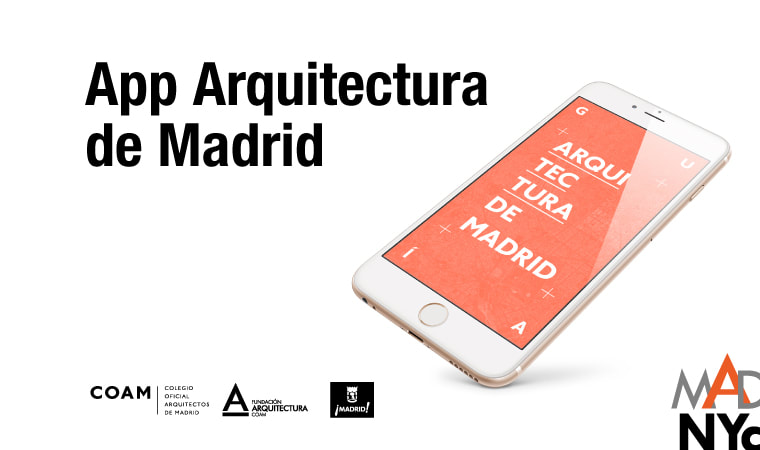
Para saber más información en profundidad, el Colegio Oficial de Arquitectos de Madrid ha creado esta APP, la cual puedes descargar desde la Play Store o Apple Store como *Guía de arquitectura de Madrid* . Esta app te enseárá información sobre una gran variedad de edificios junto con el nombre su año de construcción, estilo arquitectónico, breve contexto histórico, fotografías e imágenes de los planos. Así como, rutas recomendas mediante el plano de Madrid, la cual puede ser muy útil en caso de que quieras averiguar y ver con otro ojos una ciudad tan importante y grande como Madrid y en la cual se puede ver el reflejo del paso del tiempo, y los diferentes procesos históricos que han conformado la ciudad y la han hecho tal y como es.

Si quieres saber más información acerca de la Arquitectura de Madrid y estilos arquitectónicos sigue a Acción COAM.


​
#AccionCoam #arquitectura #madrid #architecture #archivosCOAM #apparquitetura
​

Madrid is full of wonderful buildings, from churches to skyscrapers which create an idyllic and almost magical atmosphere, in which the different architectural styles come to life showing the different historical periods, as well as the different artistic and architectural styles that make them up. 


For more in-depth information, the Colegio Oficial de Arquitectos de Madrid has created this APP, which you can download from the Play Store or Apple Store as *Guía de arquitectura de Madrid* . This app will show you information about a wide variety of buildings along with the name, year of construction, architectural style, brief historical context, photographs and images of the plans. As well as, recommended routes through the map of Madrid, which can be very useful in case you want to find out and see with other eyes a city as important and big as Madrid and in which you can see the reflection of the passage of time, and the different historical processes that have shaped the city and have made it as it is.


#AccionCoam #arquitectura #madrid #architecture #archivosCOAM #apparquitetura


0 Comentarios

5/12/2023 0 Comentarios

Pasajeros a bordo!!! Ferrocarril de La Rioja.#culturaentrevías

Cuando te encuentras sentado en la renombrada Ruta del Vino de La Rioja, sosteniendo en tu mano una copa de vino de la región, acompañado por el sonido de las vías y la belleza que se extiende más allá de la ventana, es inevitable preguntarte cómo un lugar tan embriagador puede estar conectado por una simple línea ferroviaria. Ahora, con tu curiosidad en marcha, toma tu billete--- la etiqueta #culturaentrevías y únete a nosotros a bordo del Tren de investigación de La Rioja, siguiendo los pasos de nuestros conductores Alba Veros García, Alicia Torrego Ronquillo, Carlos Esteban Coto y Rujia Chen, para embarcarte en este fascinante viaje de descubrimiento.
Nuestra primera parada te llevará a mirar por la ventana, donde encontrarás las interminables montañas de la Sierra de Demanda, acompañadas de viñedos, el sinuoso río Ebro y exuberantes bosques de álamos. A finales del siglo XIX, la línea ferroviaria de La Rioja comenzó su primera etapa, conectando La Rioja con otras ciudades importantes. A medida que avanzamos hacia principios del siglo XX, esta línea ferroviaria experimentó una expansión continua para satisfacer las crecientes necesidades de transporte, al mismo tiempo que el delicioso vino de La Rioja comenzaba su propagación en mercados nacionales e internacionales, elevando la reputación de la región. A pesar del desarrollo del transporte por carretera en etapas posteriores, la línea de La Rioja continúa atrayendo a viajeros con su inigualable valor turístico, su riqueza histórica y sus espectaculares paisajes. Aquí no solo encontrarás vinos exquisitos, sino también un rico patrimonio artístico e histórico que incluye iglesias románicas y monasterios, entre otros tesoros.
En las siguientes paradas, nuestros conductores ofrecerán una visión más detallada de la historia, el desarrollo y las características de la ruta de La Rioja. Recuerda llevar tu billete con la etiqueta #culturaentrevías para continuar explorando este hermoso viaje impregnado del aroma del vino tinto. ¡Acompáñanos en este apasionante recorrido por La Rioja!


​As you sit on Rioja's most famous wine trail, with a glass of Rioja wine in your hand, the view is magnificent and the sound of wheels and rails running under the tracks is in your ears. At this point, you may wonder how this dreamlike place is connected by a railway. Now, as we embark on a journey to discover Rioja, take your curiosity with you and the ticket---hashtag #culturaentrevías, let’s board the Rioja Research Train, Follow the lead of Alba Veros Garcia, Alicia Torrego Ronquillo, Carlos Esteban Coto and Rujia Chen on this magical journey of discovery.
First stop, invitie you to gaze out of the window, where the rolling Demanda Mountains accompany vineyards, the winding Ebro River, and lush poplar forests. In the late 19th century, the Rioja railway embarked on its first rail, connecting La Rioja with other major cities. As we fast forward to the early 20th century, the Rioja railway experienced continuous expansion to meet the growing transportation needs. It was during this time that the delicious wines of La Rioja began to spread in both domestic and international markets, elevating the region's wine reputation. Despite the subsequent development of road transportation, the Rioja railway continues to attract travelers with its unrivaled tourist value, historical significance, and breathtaking landscapes. Here, you'll find not only delicious wines but also a rich heritage of art and history, including Romanesque churches and monasteries, among other treasures.
In the upcoming stops, our conductors will provide more detailed insights into the history, development, and unique features of the Rioja route. Remember to carry our ticket with the hashtag #culturaentrevías to continue exploring this beautiful journey infused with the aroma of red wine. Join us as we journey through this captivating world!
0 Comentarios

    Autor

    Blog de las y los estudiantes del Máster Interuniversitario El Patrimonio Cultural en el Siglo XXI: Gestión e Investigación (UCM y UPM)

    Archivos

    Abril 2024
    Marzo 2024
    Febrero 2024
    Enero 2024
    Diciembre 2023
    Noviembre 2023
    Octubre 2023

    Categorías

    Todo

Con tecnología de Crea tu propio sitio web con las plantillas personalizables.